Scenes
10
Interactive access points to concrete spaces.

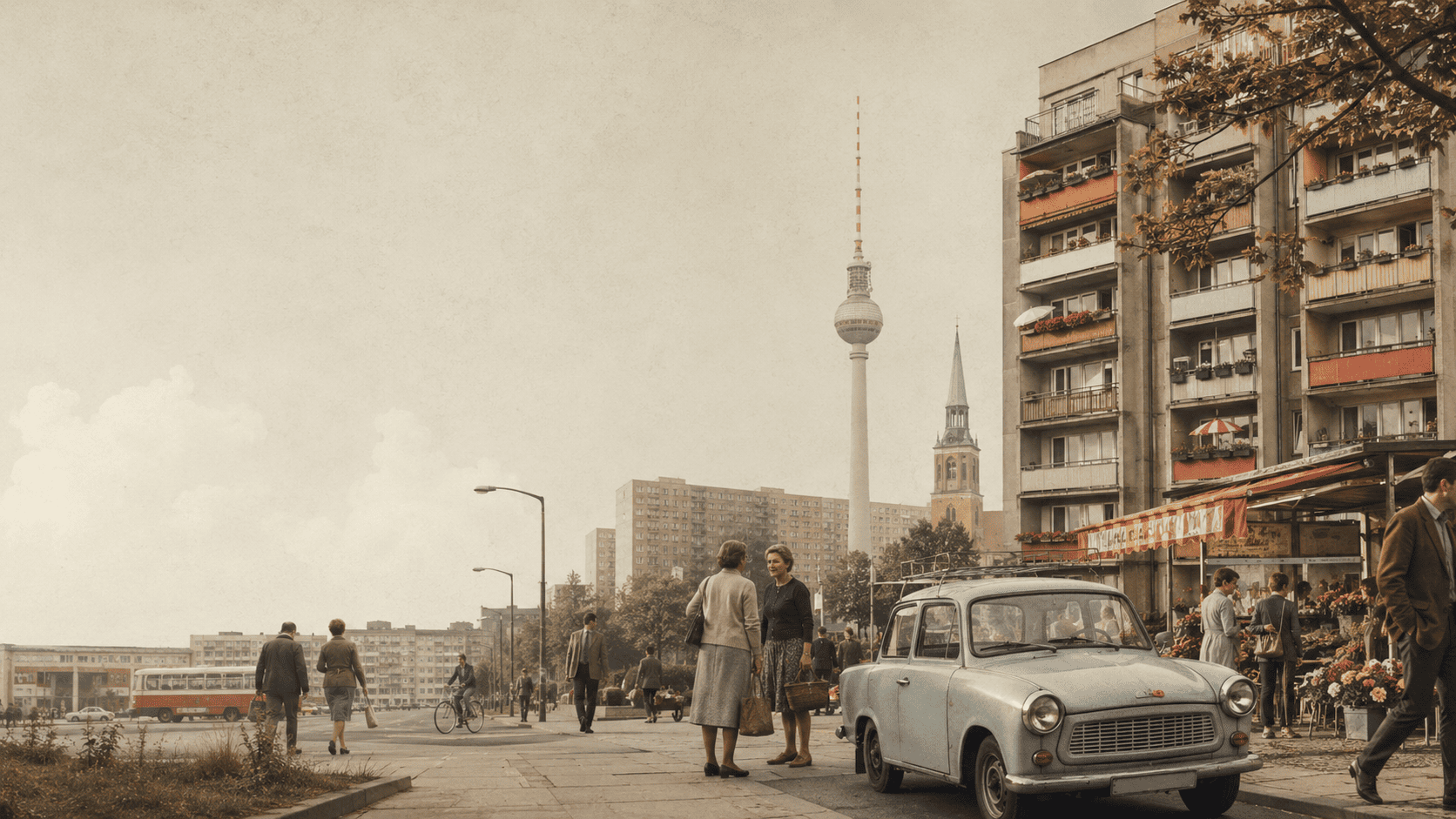
DDR Leben takes you into the rooms, objects, habits and memories of everyday life in the GDR. Not as a romanticised backdrop, but as a growing experience platform with history, atmosphere and personal voices.
The site is designed as a growing memory space: you can explore everyday environments, understand historical developments and contribute your own memories.
New scenes, hotspots, timeline moments and memories continue to expand DDR Leben. Every area should remain understandable, atmospheric and carefully contextualised.
Interactive access points to concrete spaces.
Objects, places and dense everyday moments.
Framing, development and historical context.
After the end of the Second World War, political, economic and social reconstruction begins in the Soviet occupation zone under Soviet influence. This development forms the background to the later GDR.
The SED is formed from the forced merger of the KPD and SPD in the Soviet occupation zone. It becomes the dominant political force of the later GDR state.
The blockade of West Berlin intensifies the conflict between the former Allies. The airlift makes the division of Germany and Berlin increasingly visible.
DDR Leben looks at housing, household life, school, youth, leisure, media, mobility and private retreats as connected life worlds. This creates a broader view of everyday life in the GDR.
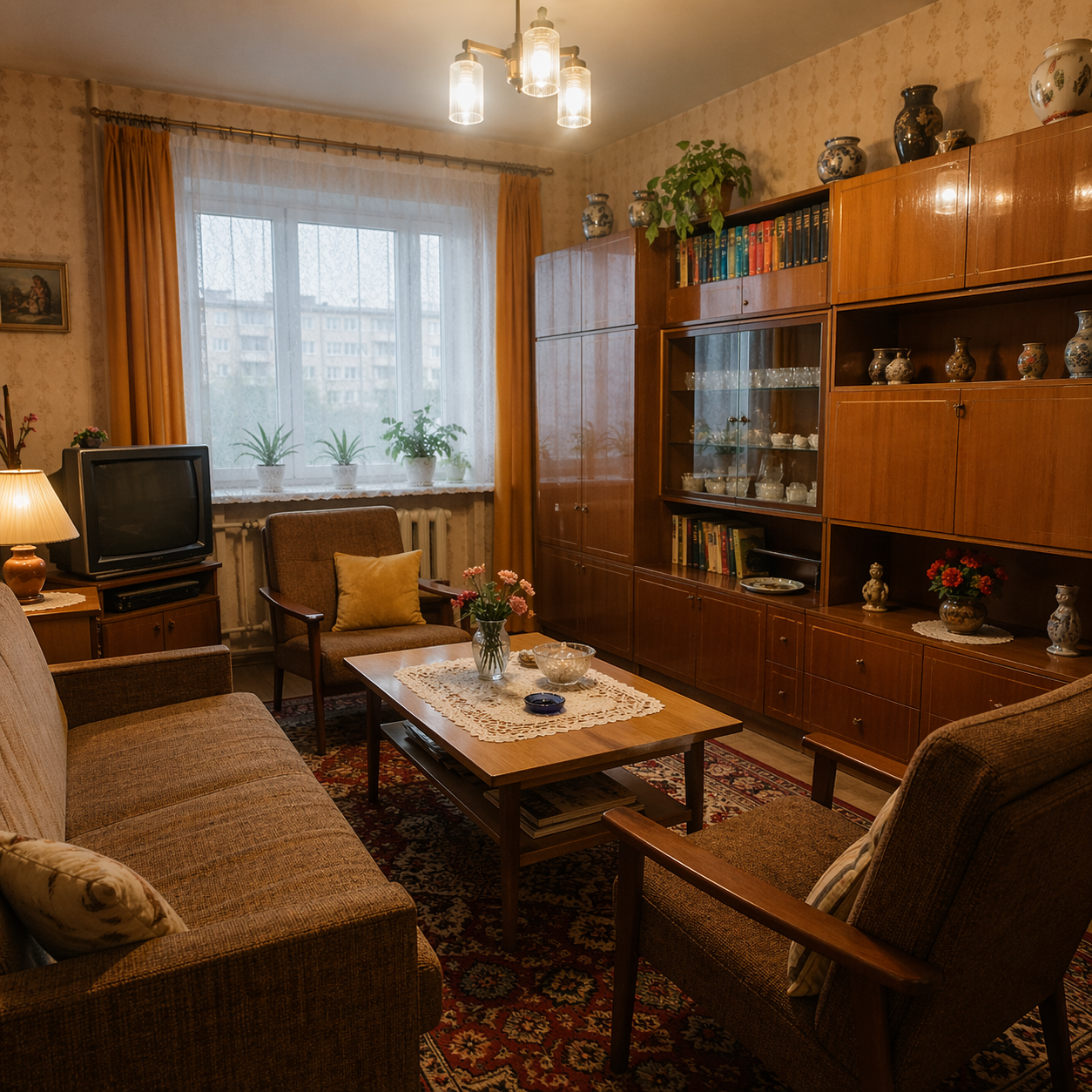
Everyday life overviewWall units, coffee tables, armchairs, television sets and decoration shaped many living rooms. What mattered was less luxury than function, availability and the personal use of what was there.
The kitchen was a workspace, meeting point and centre of organisation. It was about cooking, washing up, storing supplies, managing shortages and finding practical everyday solutions.
School, the pioneers, the FDJ, youth consecration and leisure activities were part of everyday life for many young people. Between obligation, community and personal freedom, a youth culture of its own emerged.
Allotments and garden houses were important places of retreat for many people. They were places for building, repairing, harvesting, celebrating and briefly stepping away from everyday routine.
Whether by bicycle, moped, Trabant, bus or train: mobility shaped how work, shopping, family, leisure and holidays could be reached.
Media shaped information, entertainment and everyday conversation. Between official reporting, West German television, music and family rituals, routines of their own developed.
DDR Leben looks at politics and history, but above all at how people lived, worked, celebrated, waited, improvised and remembered.
Living rooms, kitchens, schools, garden houses and youth rooms are shown as places where everyday life becomes visible and memorable.
A table, sink, radio or FDJ cup is not mere decoration. Such objects open access to habits, shortages, pride, adaptation and memory.
Living room, kitchen, bedroom, bathroom, hallway, youth room, garden house, workplace and shopping show different sides of everyday life in the GDR. The scenes are intentionally general and make typical functions, objects and places of memory visible.
Selected events show how politics, everyday life and memory took shape between 1945 and 1990.
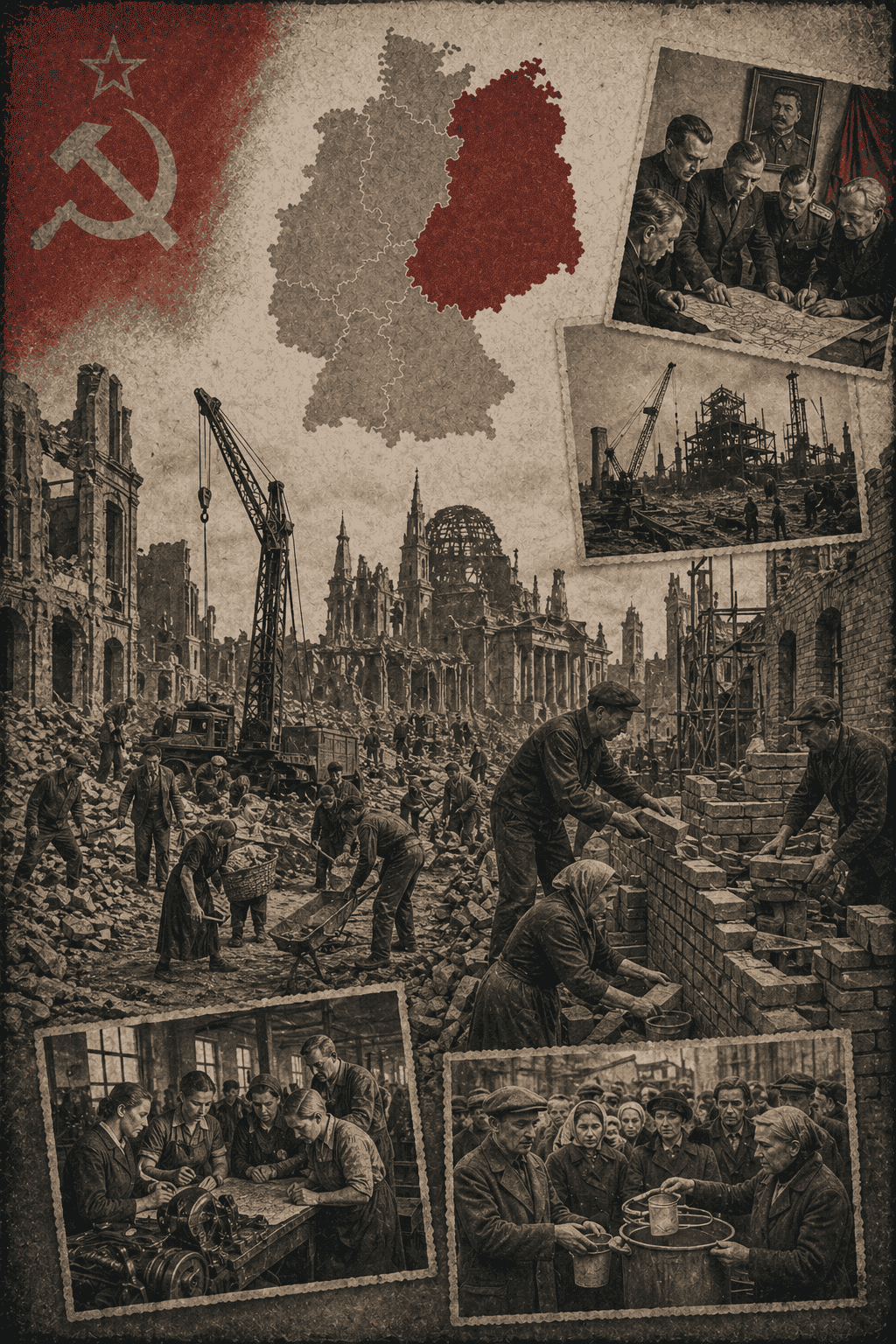
After the end of the Second World War, political, economic and social reconstruction begins in the Soviet occupation zone under Soviet influence. This development forms the background to the later GDR.
After the end of the Second World War, political, economic and social reconstruction begins in the Soviet occupation zone under Soviet influence. This development forms the background to the later GDR.
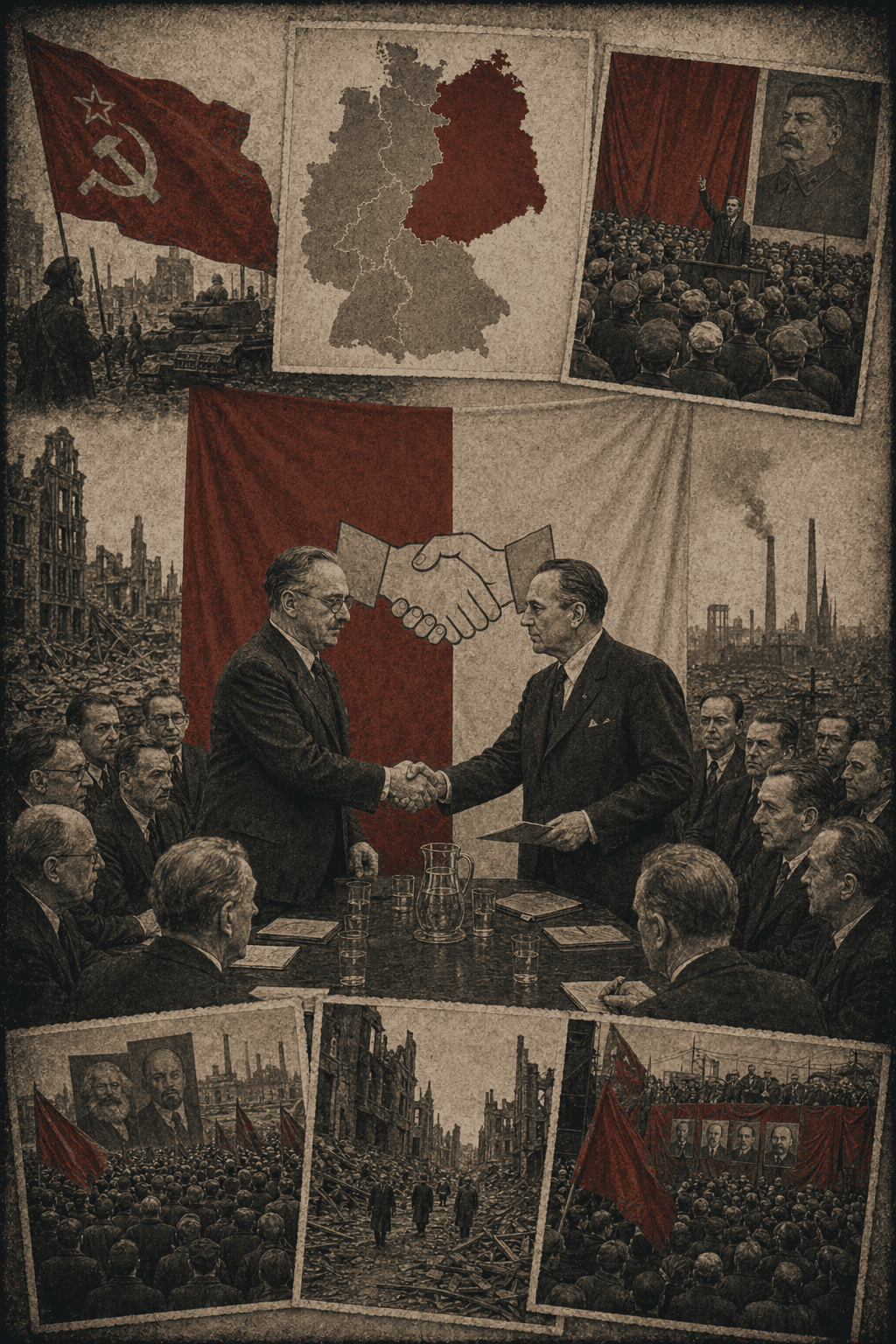
The SED is formed from the forced merger of the KPD and SPD in the Soviet occupation zone. It becomes the dominant political force of the later GDR state.
The SED is formed from the forced merger of the KPD and SPD in the Soviet occupation zone. It becomes the dominant political force of the later GDR state.
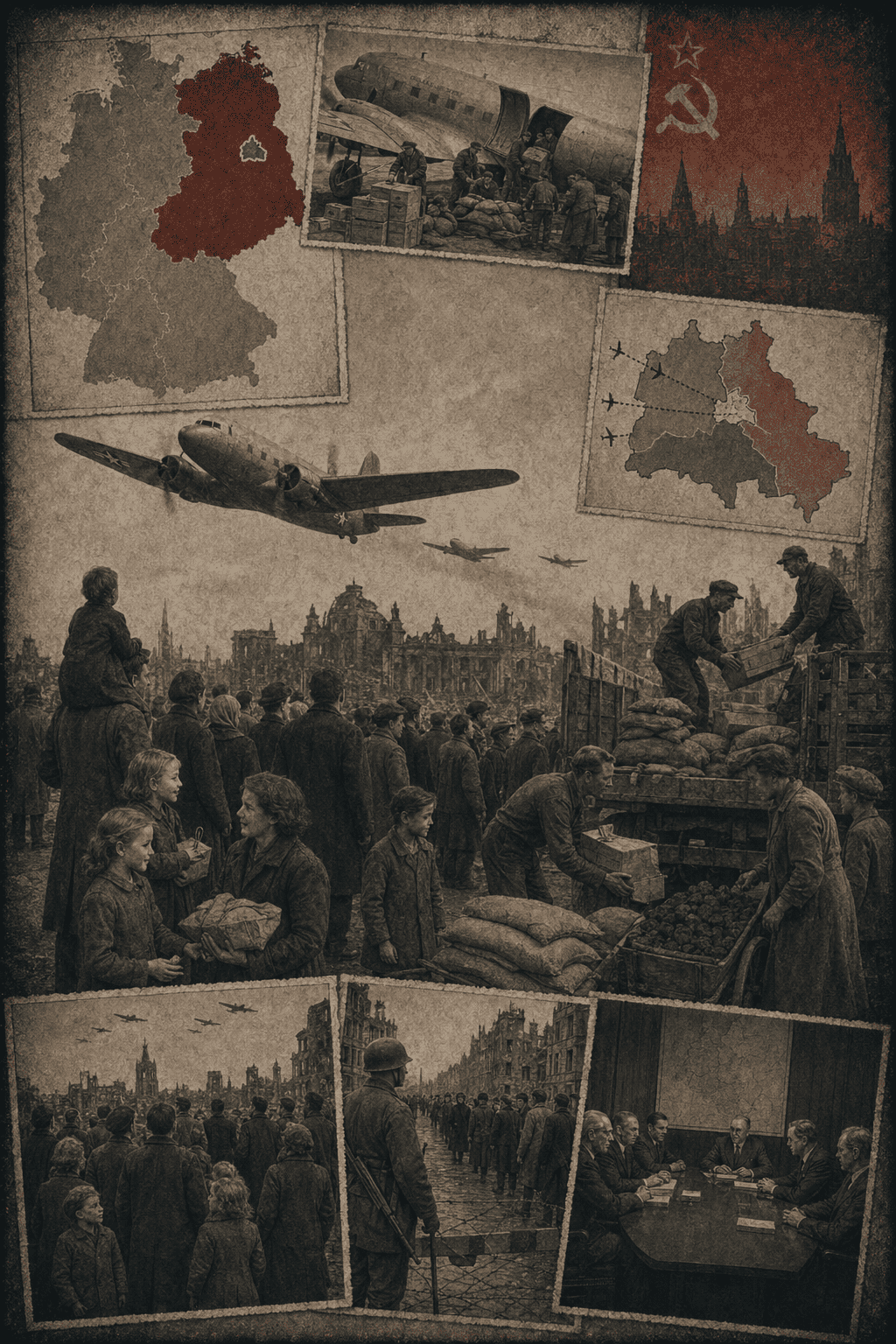
The blockade of West Berlin intensifies the conflict between the former Allies. The airlift makes the division of Germany and Berlin increasingly visible.
The blockade of West Berlin intensifies the conflict between the former Allies. The airlift makes the division of Germany and Berlin increasingly visible.
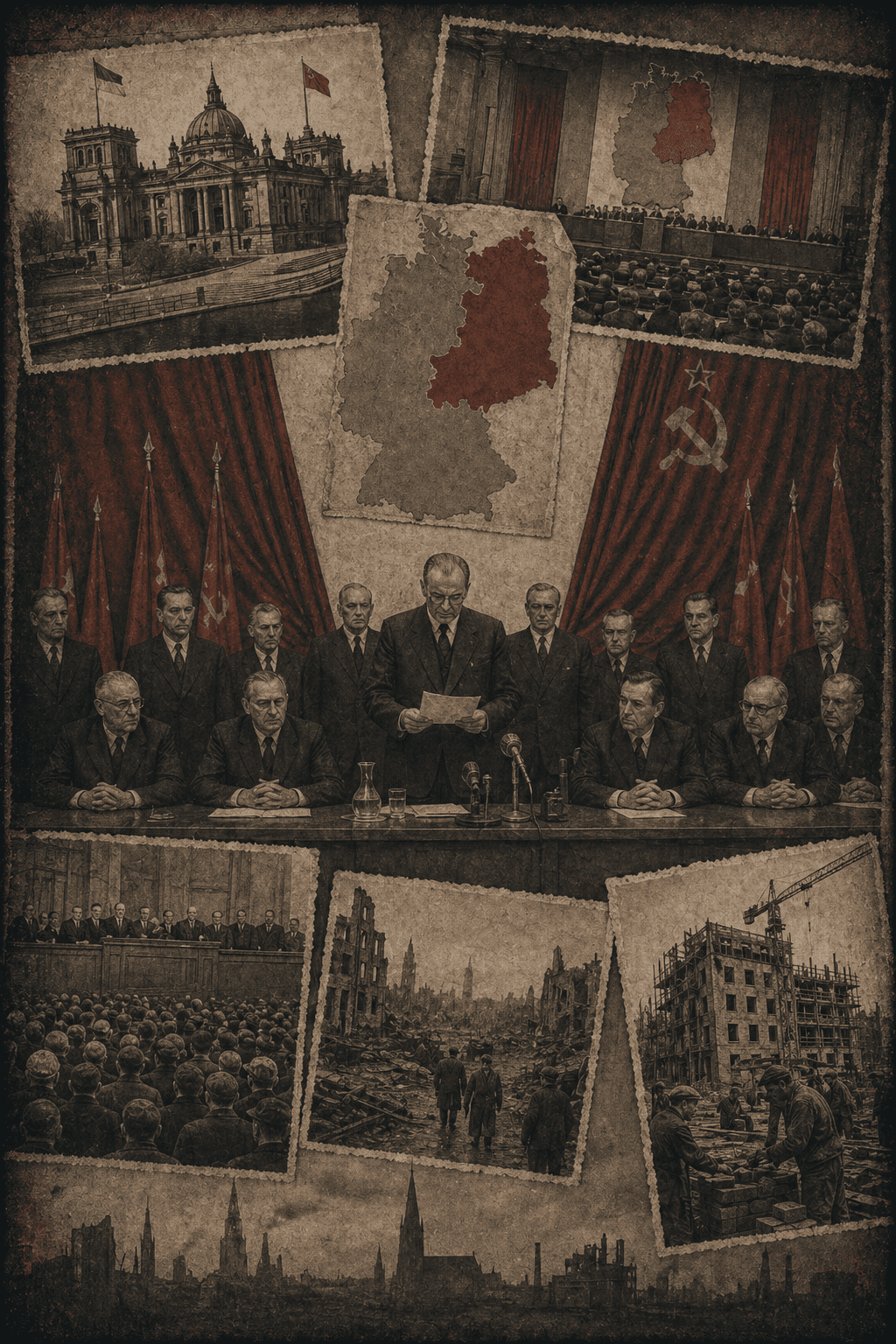
The German Democratic Republic is founded as the second German state on the territory of the Soviet occupation zone.
The German Democratic Republic is founded as the second German state on the territory of the Soviet occupation zone.
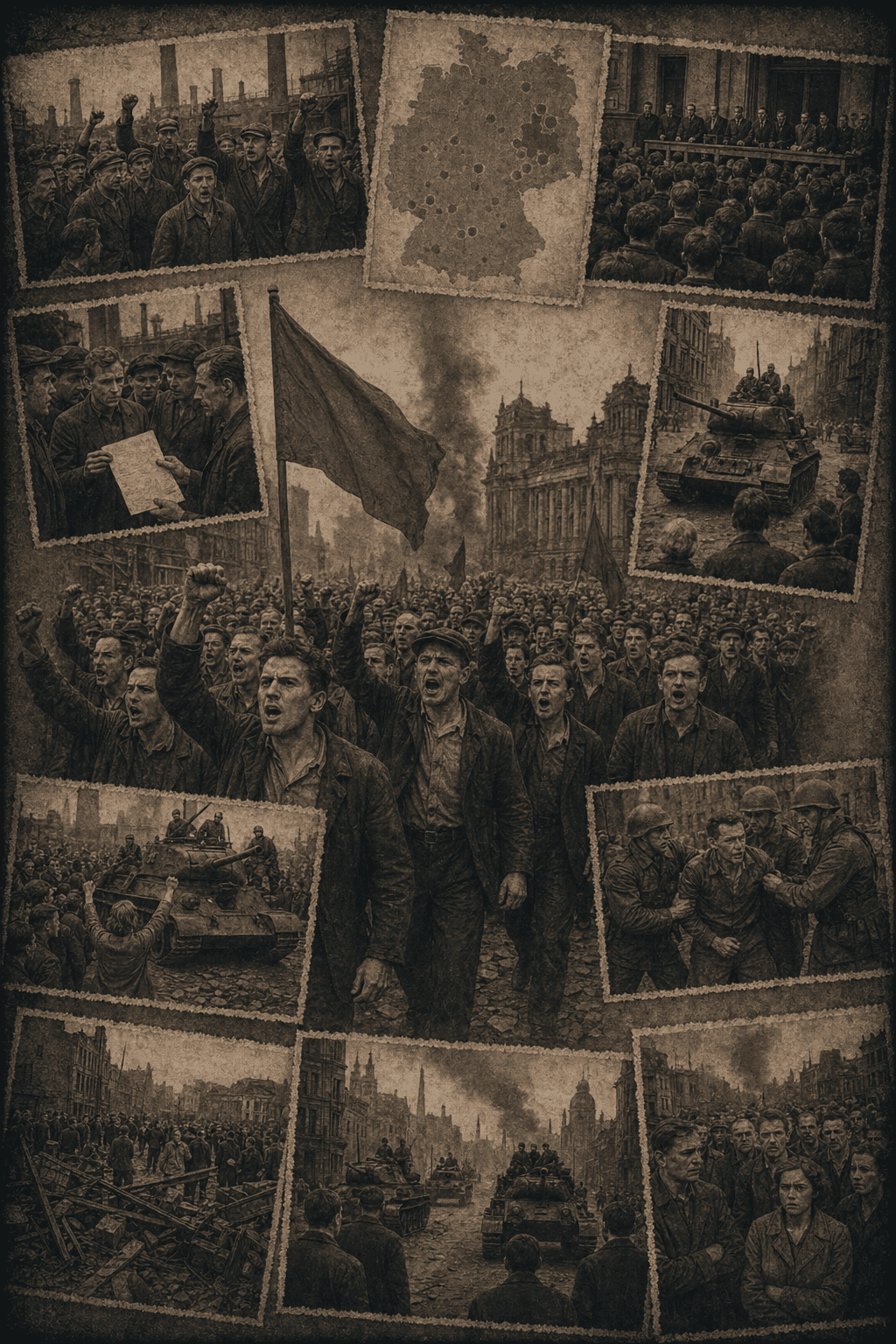
Strikes and protests develop into a nationwide uprising against political and economic conditions. It is suppressed with Soviet military support.
Strikes and protests develop into a nationwide uprising against political and economic conditions. It is suppressed with Soviet military support.
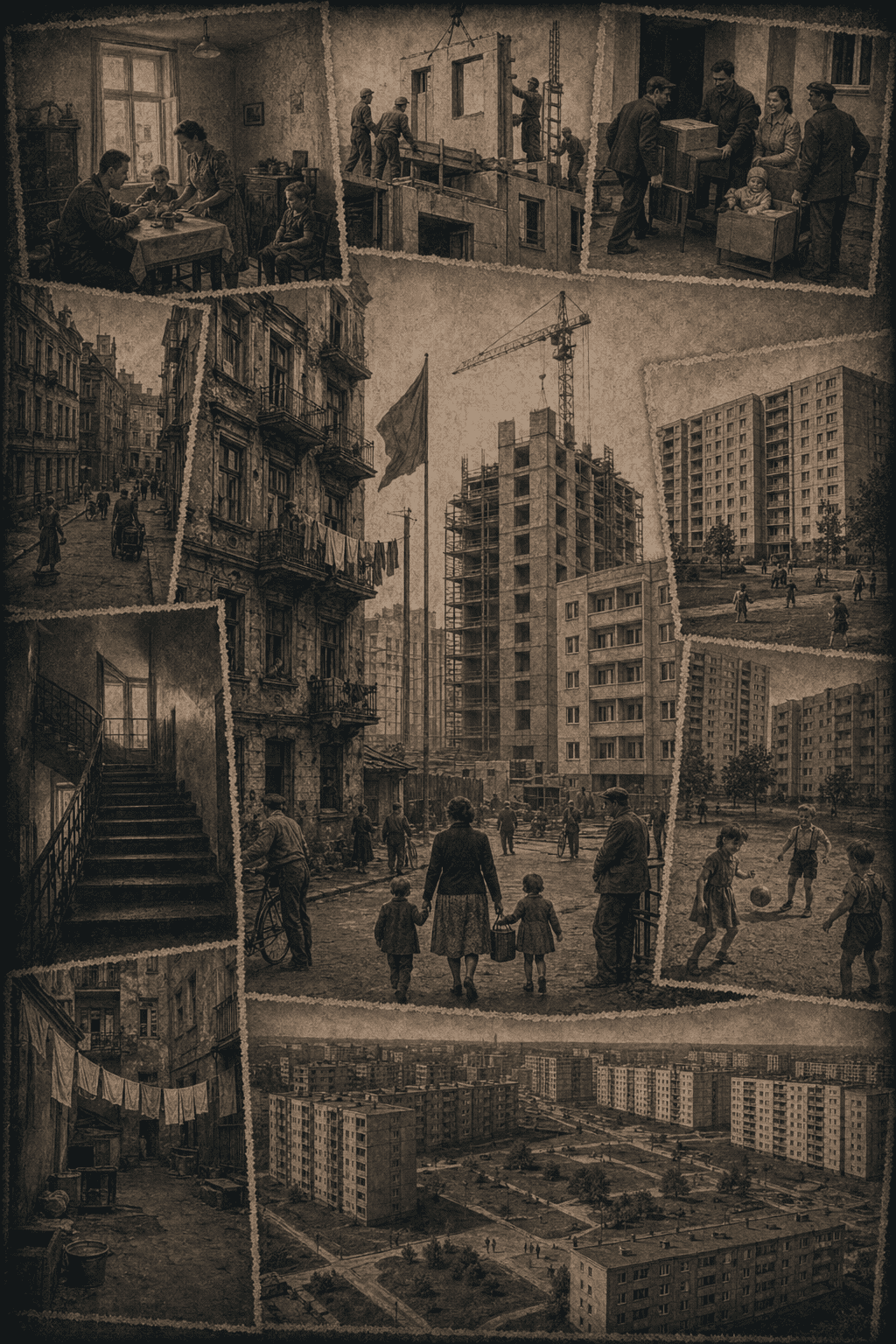
Housing in the GDR varies widely. Alongside older apartments, large new housing estates with typical prefabricated buildings later emerge and permanently change many towns and cities.
Housing in the GDR varies widely. Alongside older apartments, large new housing estates with typical prefabricated buildings later emerge and permanently change many towns and cities.
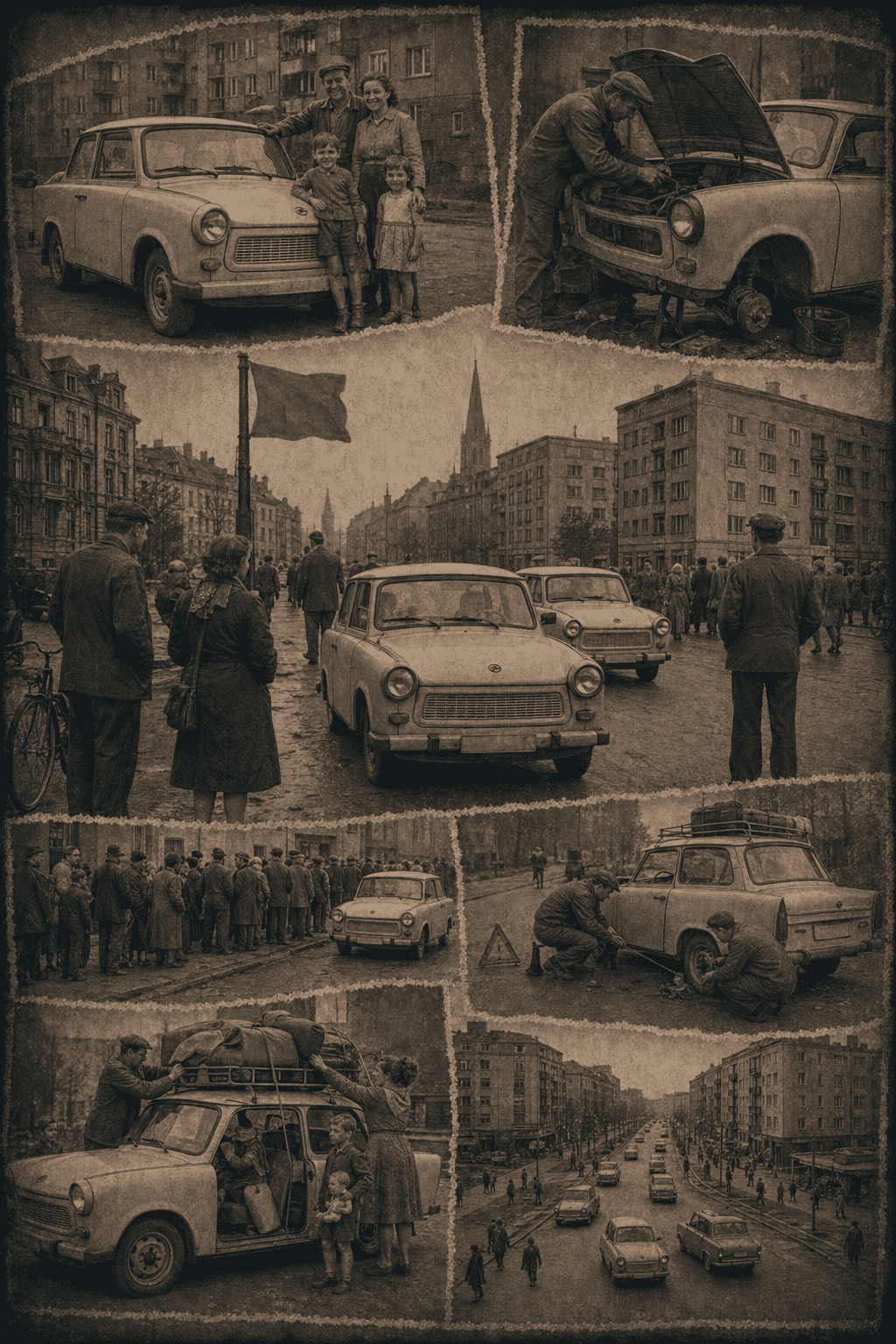
With the Trabant, a car emerges that becomes a symbol of mobility in the GDR for many people. Long waiting times, repairs and improvisation later become just as much a part of it as personal memories.
With the Trabant, a car emerges that becomes a symbol of mobility in the GDR for many people. Long waiting times, repairs and improvisation later become just as much a part of it as personal memories.
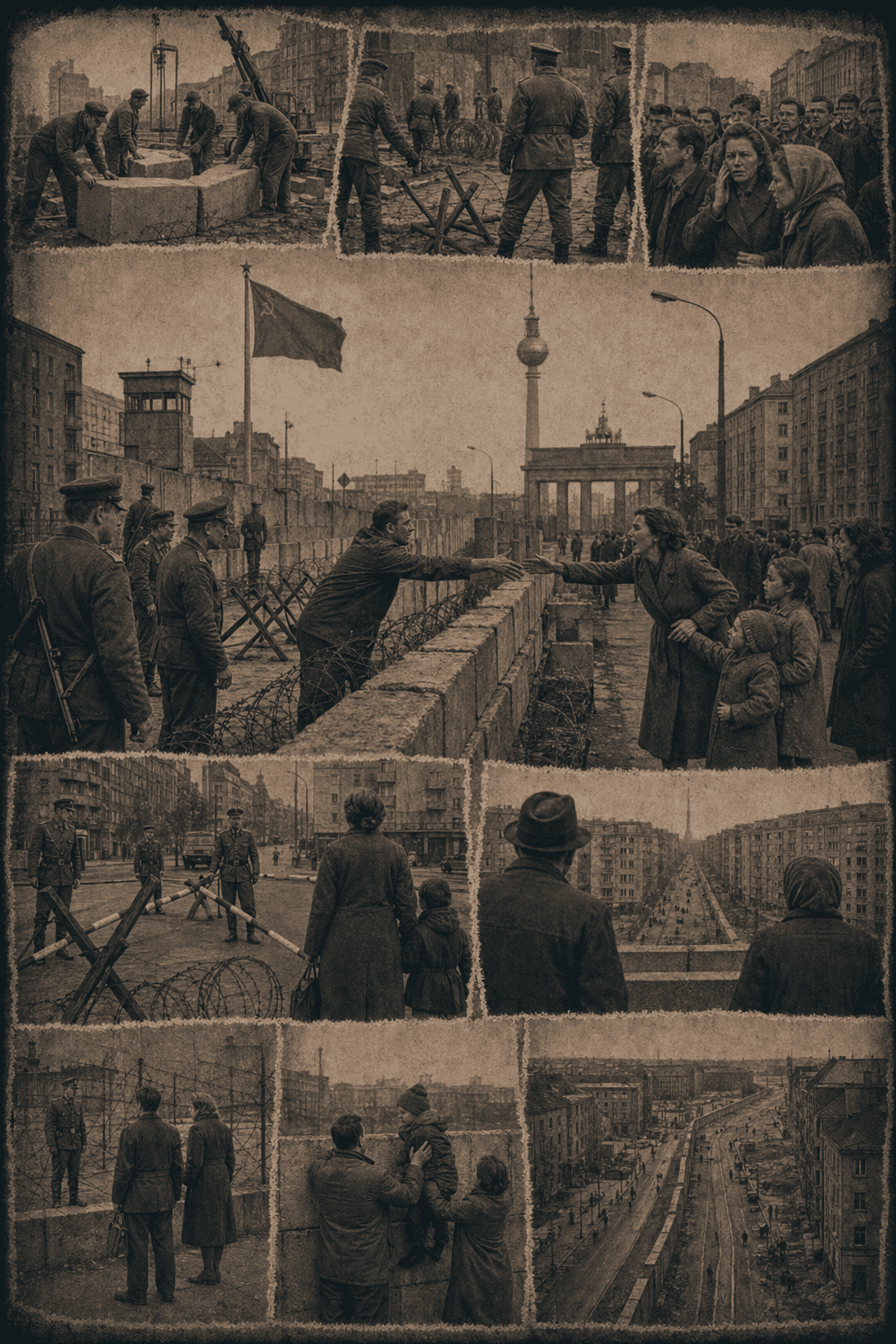
With the construction of the Berlin Wall, the division of Germany becomes brutally visible. Families, routes and life paths are permanently separated.
With the construction of the Berlin Wall, the division of Germany becomes brutally visible. Families, routes and life paths are permanently separated.
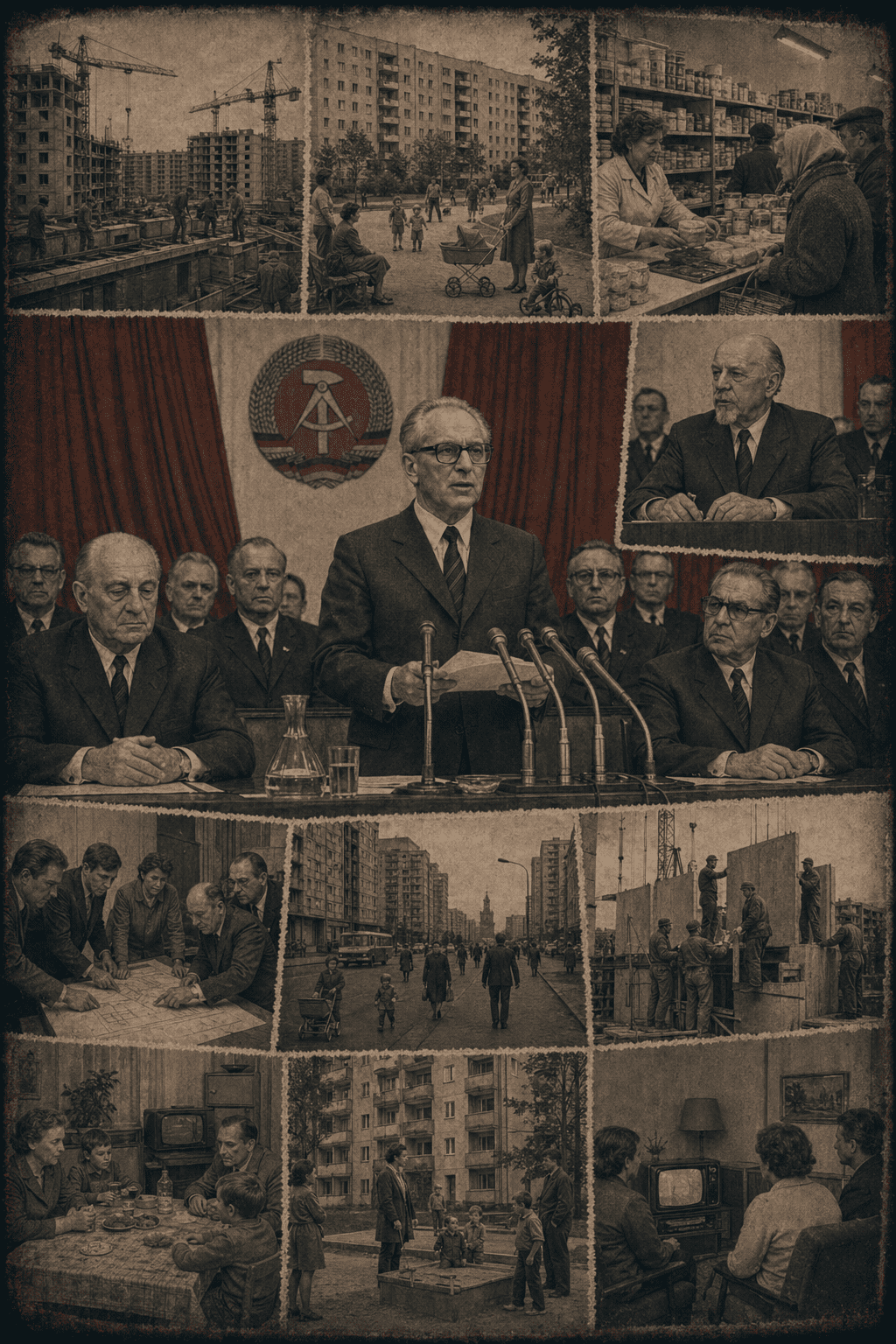
Erich Honecker replaces Walter Ulbricht. The new leadership places greater emphasis on social policy, housing construction and stabilising everyday provision.
Erich Honecker replaces Walter Ulbricht. The new leadership places greater emphasis on social policy, housing construction and stabilising everyday provision.
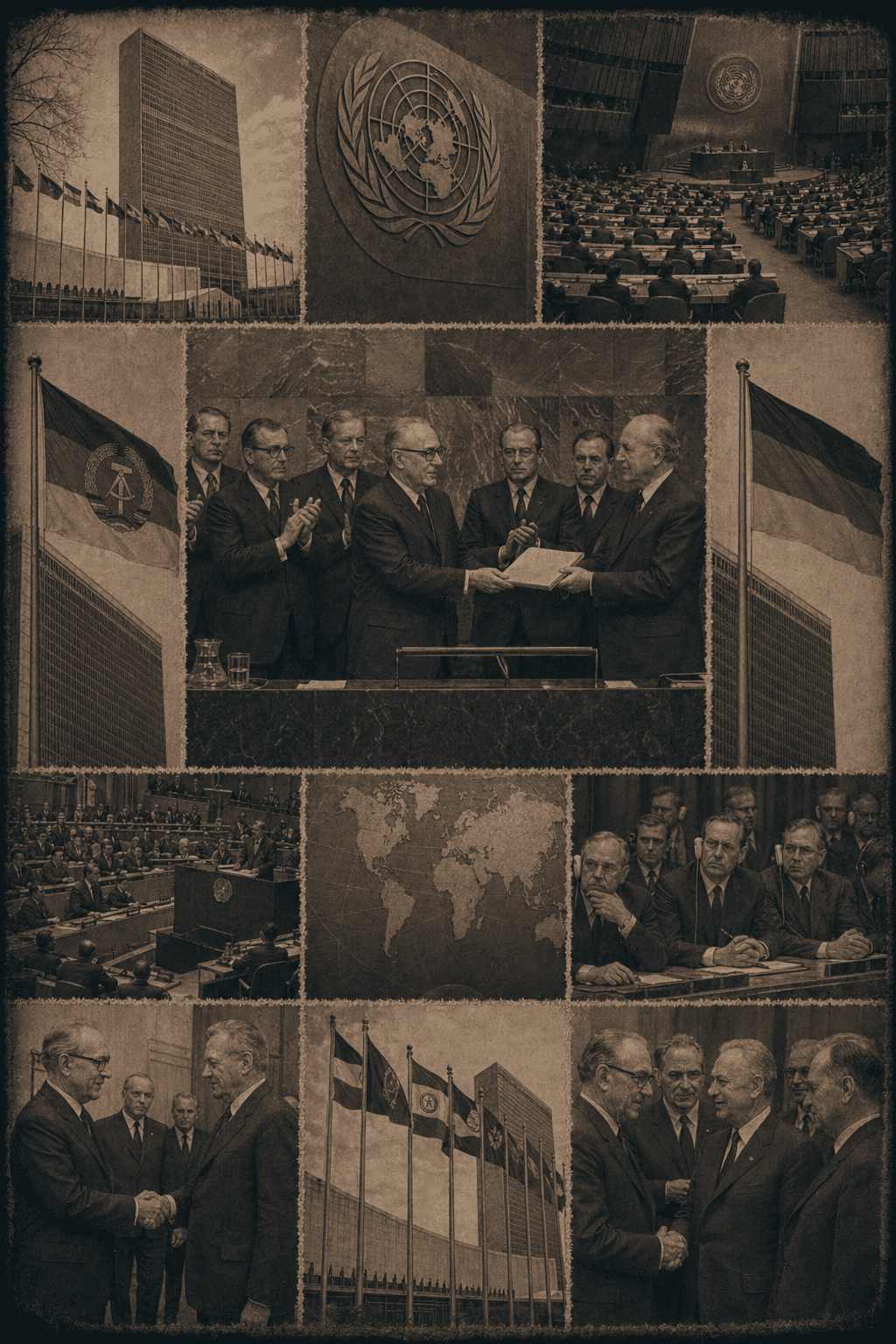
The GDR and the Federal Republic of Germany are admitted to the United Nations. This gives the GDR further formal international recognition.
The GDR and the Federal Republic of Germany are admitted to the United Nations. This gives the GDR further formal international recognition.
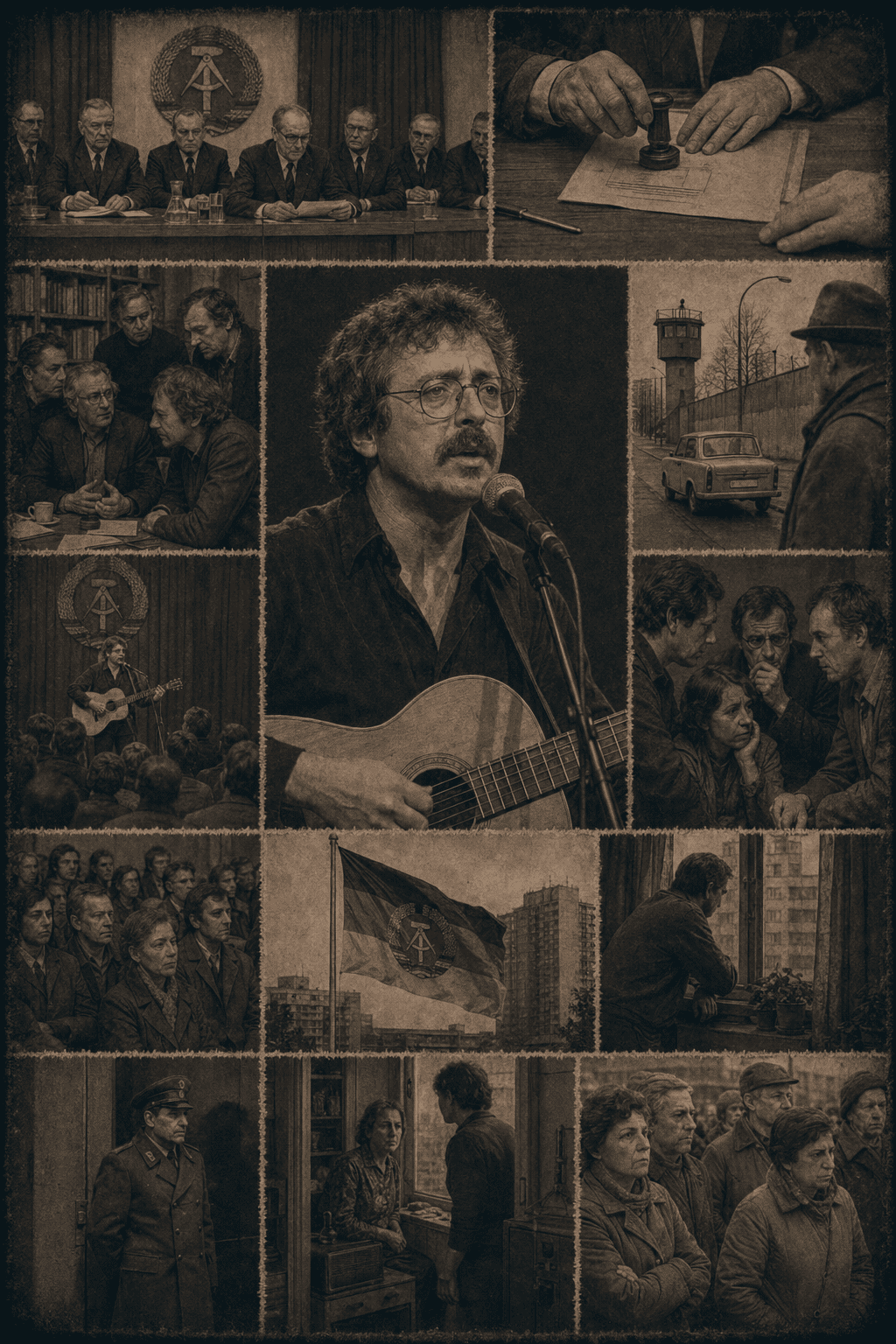
The expulsion of songwriter Wolf Biermann marks a turning point in the relationship between the state, art and critical public voices.
The expulsion of songwriter Wolf Biermann marks a turning point in the relationship between the state, art and critical public voices.
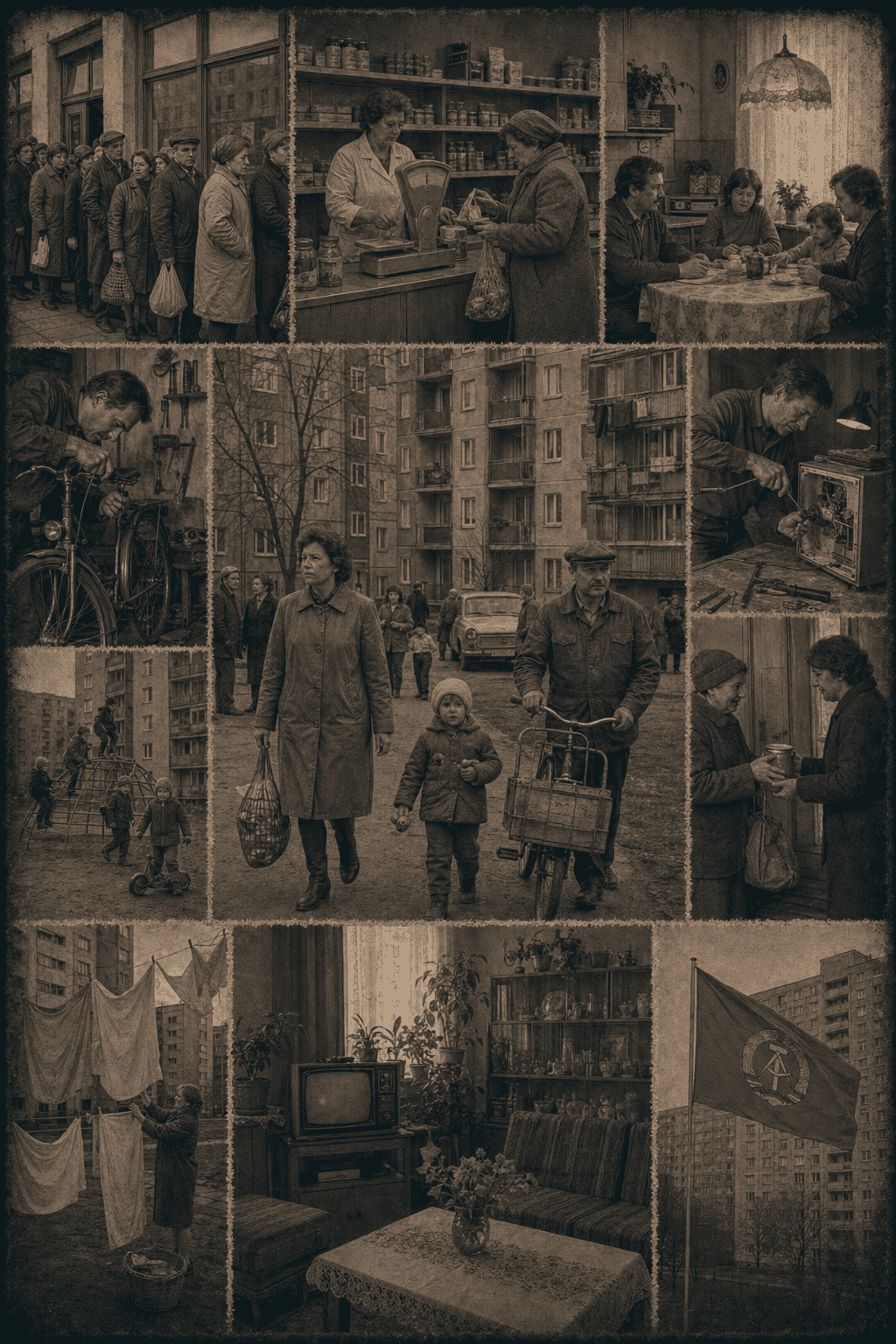
In many areas, waiting times, scarce goods, private networks and improvisation shape everyday life. At the same time, routines, pride, habits and personal memories emerge.
In many areas, waiting times, scarce goods, private networks and improvisation shape everyday life. At the same time, routines, pride, habits and personal memories emerge.
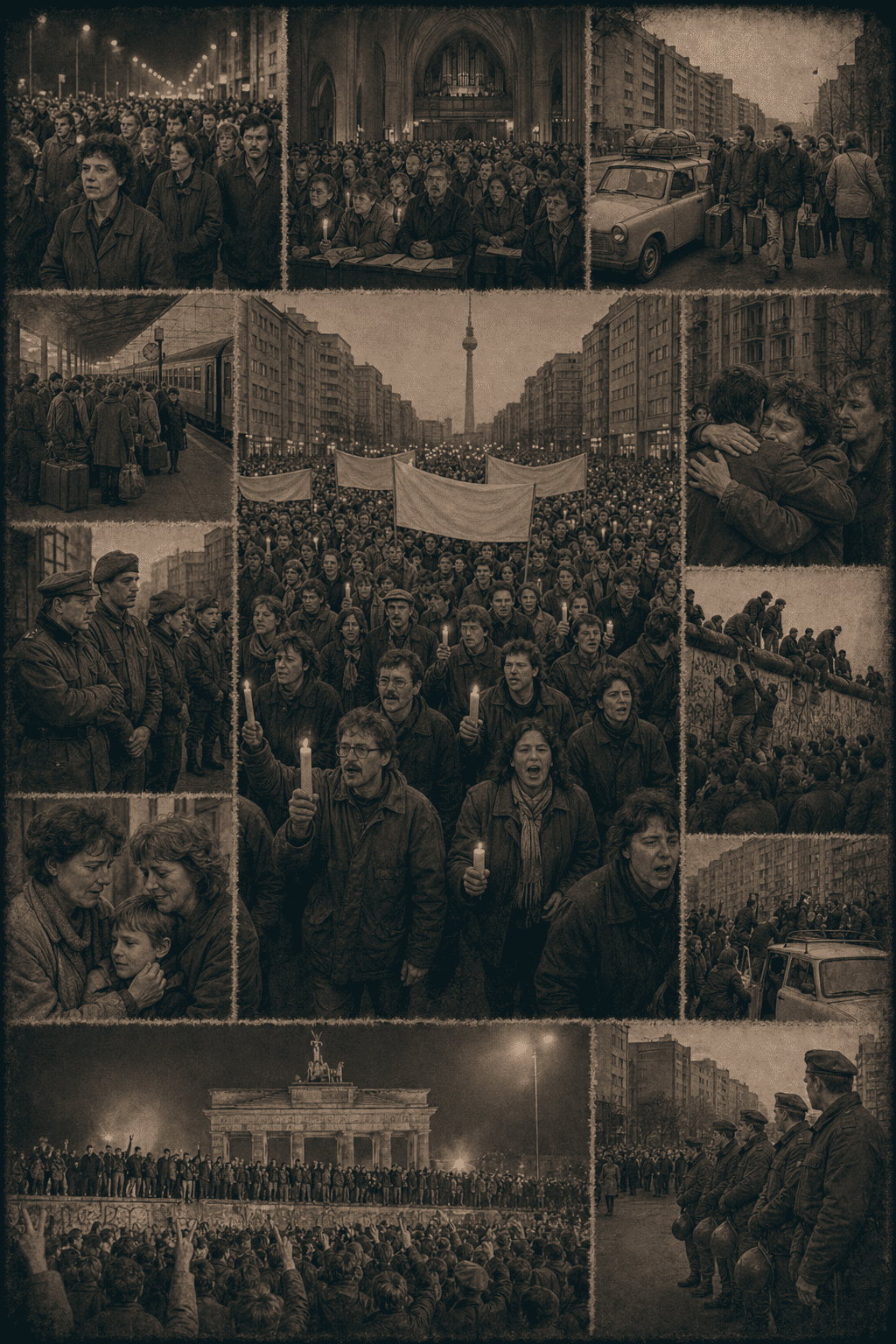
Demonstrations, emigration movements and growing social pressure shake the political system of the GDR. Many people experience this period as a departure, a risk and a historic turning point.
Demonstrations, emigration movements and growing social pressure shake the political system of the GDR. Many people experience this period as a departure, a risk and a historic turning point.
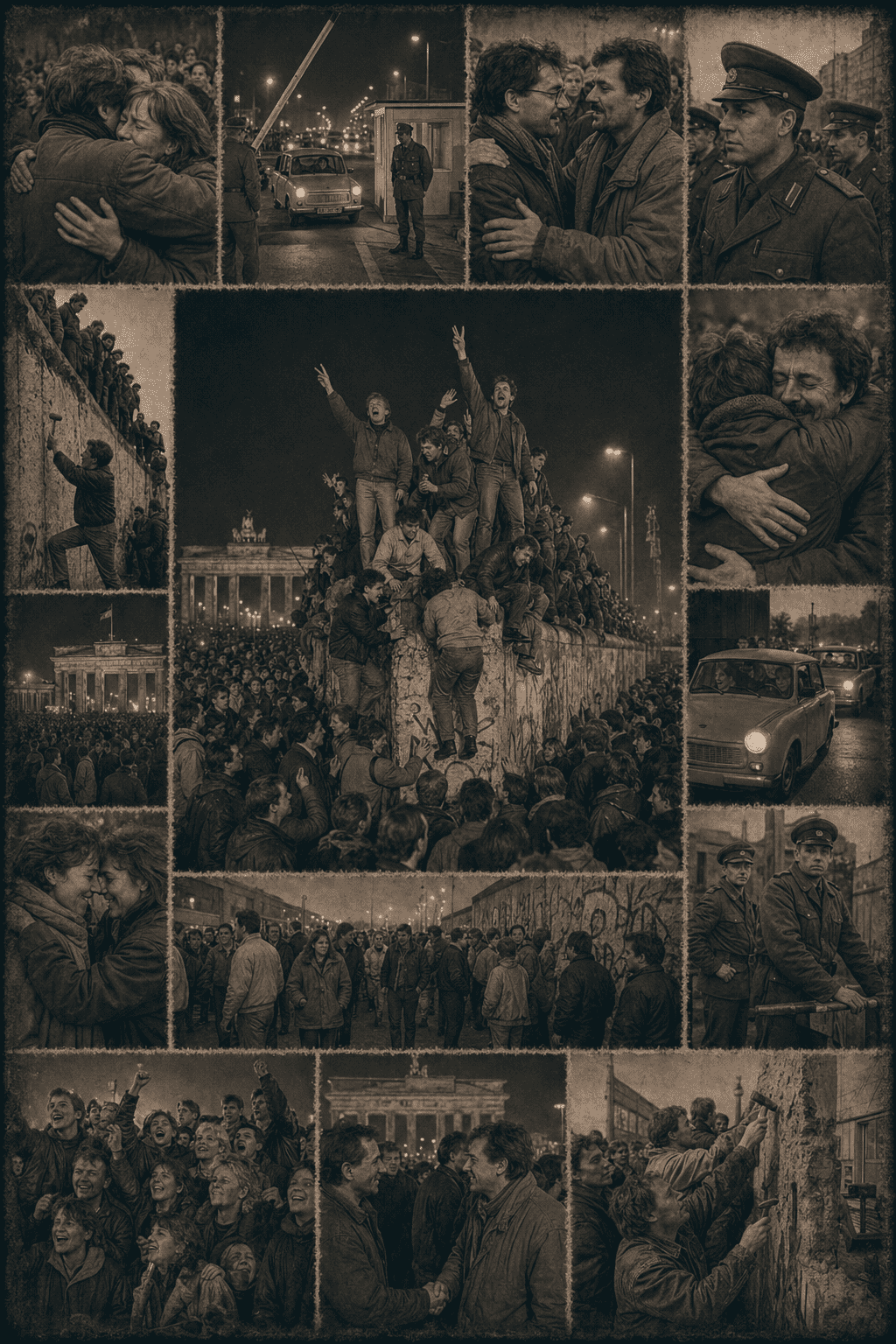
The Berlin Wall falls. For many people, a time begins that is marked by euphoria, uncertainty, hope and profound change.
The Berlin Wall falls. For many people, a time begins that is marked by euphoria, uncertainty, hope and profound change.
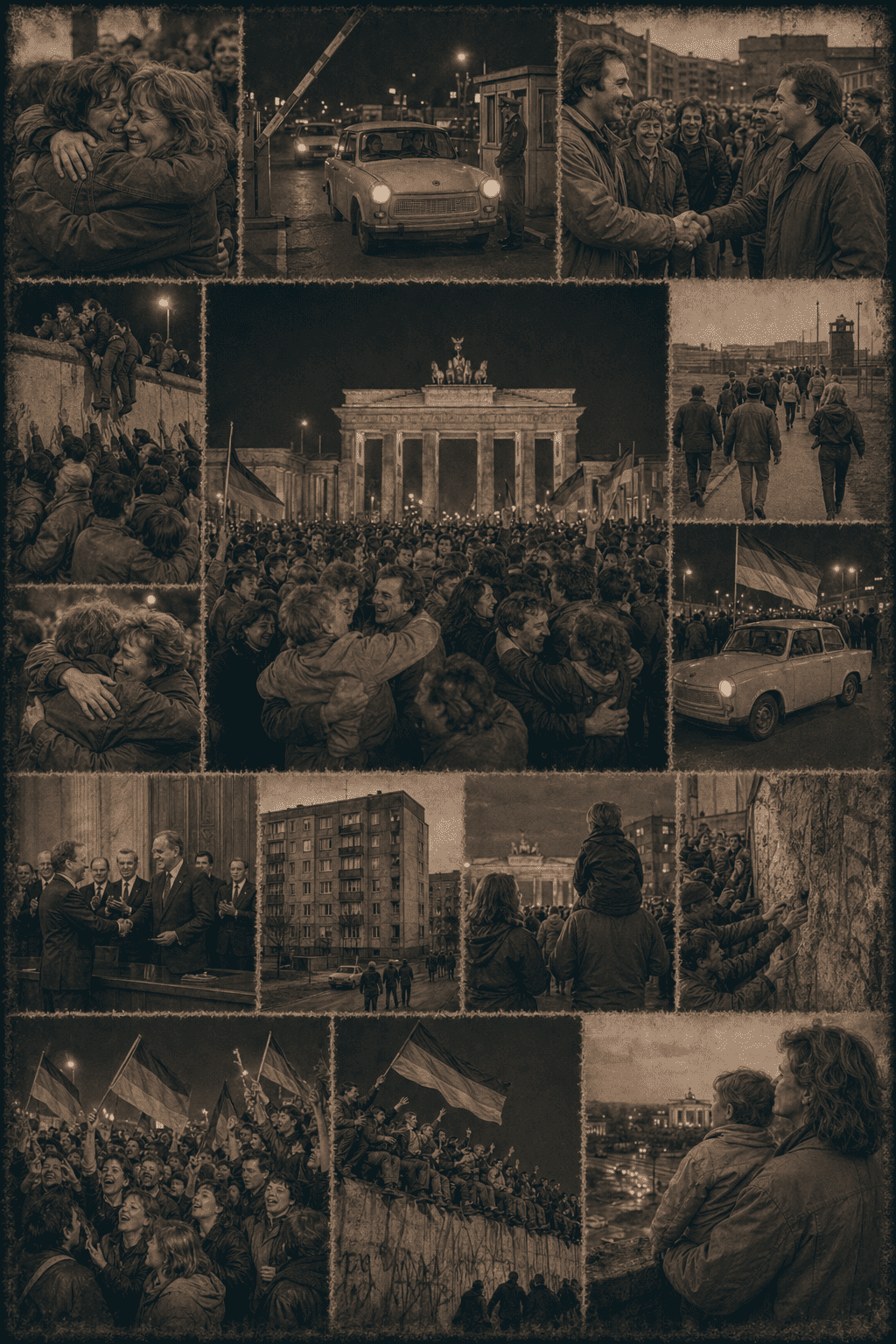
With the GDR joining the Federal Republic, the state existence of the GDR ends. Its everyday history, memories and traces remain present.
With the GDR joining the Federal Republic, the state existence of the GDR ends. Its everyday history, memories and traces remain present.
Rooms, objects and historical dates explain a lot. Everyday life becomes truly tangible when people describe what they remember, how something was used and what it meant in daily life.
When people were working in the kitchen, the radio often stayed on. Not loudly, more like a constant backdrop. News, music, programmes — some of it barely noticed at the time and still remembered today.
In many homes it was simply there. Glasses, books, keepsakes, photographs — everything had its place. It stood for order, but also for what a household wanted to display.
Not large, often rather cramped — and still the place where music, notebooks, posters and thoughts came together. Between school, expectations and dreams, it was often the only truly personal area.
People ate there, wrote there, discussed things there and sometimes simply sat there. Many memories are tied not to major events, but to exactly these ordinary places.
People knew when certain programmes were on. Some broadcasts had a fixed place in the rhythm of a day or week. Television was not only entertainment, but often part of shared routine.
DDR Leben should not only explain, but also collect and preserve. If you remember an everyday situation, an object, a place, a photo or a family story, you can turn it into a contribution.
A few sentences are enough: What was it about? Where did it matter? Why did it stay in your memory?
If available, photos, documents, object details, years or additional notes can help. But they are not required.
Submissions are reviewed, contextualised and only published if they fit the platform and no private details become visible without review.
DDR Leben is meant to grow step by step: with more scenes, more voices, more context and more real memories from different perspectives.
A submission does not have to be a finished article. What matters is the memory value: What was it? Where did it belong? How was it used? Why did it stay in your memory?
For example a memory of kitchen, living room, school, work, shopping, holidays, family, leisure or neighbourhood.
Even a single object can tell a lot: how was it used, where was it kept, who remembers it?
If something should be explained more precisely, regionally differently or more accurately, that note is valuable too.
DDR Leben aims neither to romanticise nor to condemn. The platform takes memories seriously, shows differences and contextualises content carefully.
No unchecked publication.
Personal voices with editorial context.
Everyday life, atmosphere and history in context.
Growth with a clear line, not an arbitrary collection.
We use necessary functions to operate the site. Advertising via Google AdSense is only loaded if you agree.